Warmer walls, checked properly before anyone drills
We survey your walls first, tell you in writing whether they can be filled and with what, and give you a fixed price. Filling, top-ups, removal of failed insulation and the repairs in between.
- Free survey with an install quote, and a written result for every wall
- Registered installer and guarantee named on your quote before you book
- No VAT on installing insulation in homes until 31 March 2027
Prefer a number first? Try the guide-price tool.
Get your free survey
Tell us about the property and we will arrange a survey and a fixed price.
 Filled from outside, usually in a day
What goes in the gap
- Brick outer leaf
- Cavity fill
- Block inner leaf
- Guarantee named on your quote
- Free survey with an install quote
- Installer and scheme registrations named
- England, Wales, Scotland and NI
- Fixed price in writing before work
Everything to do with cavity walls
From a first fill to putting right a failed one. Choose a service for prices, what is included and how it works.
Insulate your walls
Fill an empty cavity, top up a patchy one, or insulate as you build.
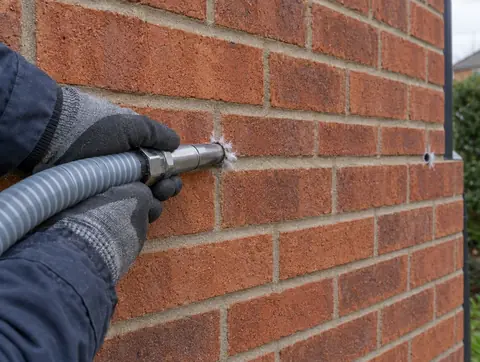
Cavity wall insulation
Survey, drill, fill and make good: an empty cavity filled with a certified system.
Learn more →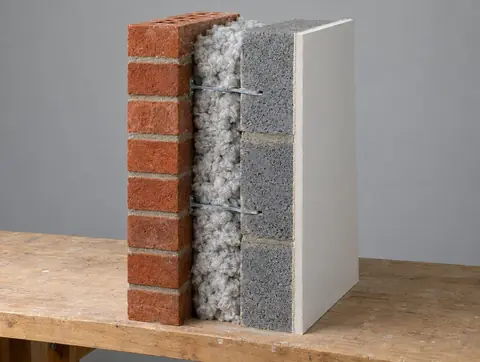
Blown mineral wool insulation
Water-repellent mineral fibre blown into the cavity: the long-standing standard fill.
Learn more →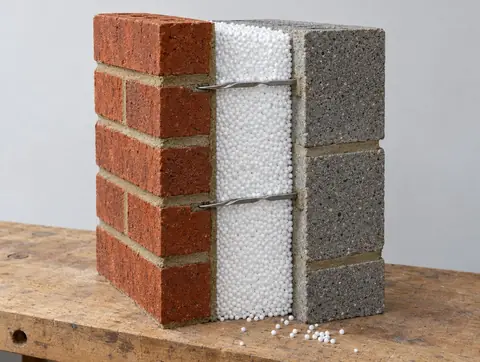
Bonded polystyrene bead insulation
Expanded polystyrene beads coated with a binder so they lock together in the cavity.
Learn more →
Party wall cavity insulation
Seal the hidden cavity between you and next door that leaks heat into the loft.
Learn more →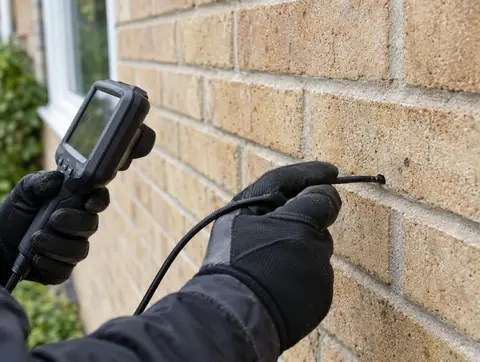
Cavity insulation top-up
Fill the gaps in an older, patchy or disturbed cavity fill without starting again.
Learn more →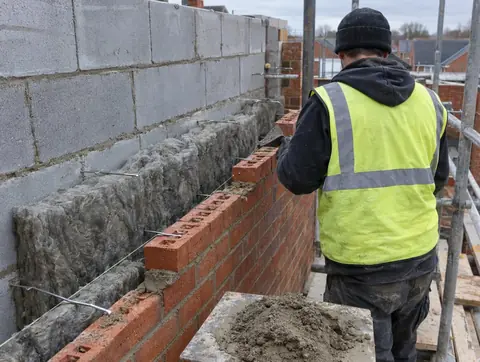
Cavity insulation for new builds and extensions
Full-fill or partial-fill batts fitted as the walls go up, for builders and self-builders.
Learn more →Surveys and checks
Find out what is in your walls before anyone drills.
Cavity wall suitability survey
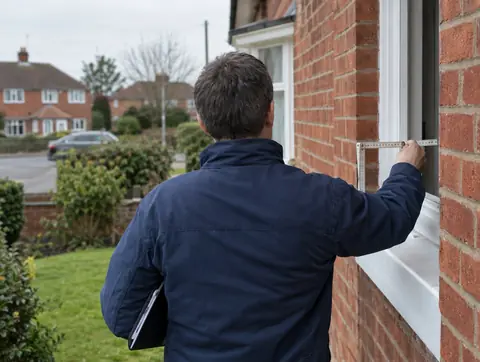
The check that comes before any drilling: walls, cavity, condition and exposure.
Learn more →Borescope cavity inspection
A camera through a small hole shows what is really in your cavity.
Learn more →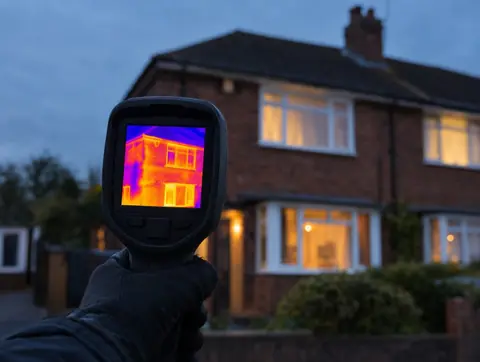
Thermal imaging survey
Infrared images that show where heat escapes: empty panels, gaps and cold bridges.
Learn more →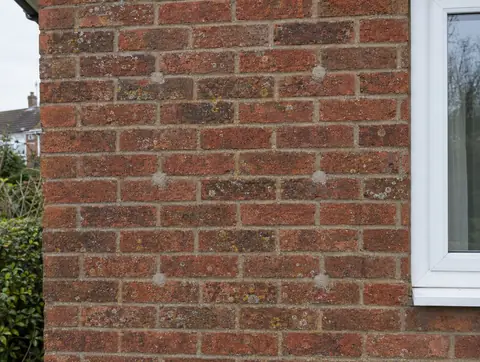
Existing insulation and guarantee check
For buyers, sellers and owners: is the cavity filled, is it sound, is there a guarantee?
Learn more →Problems, removal and repairs
Damp, failed fills, debris and corroded ties, put right properly.
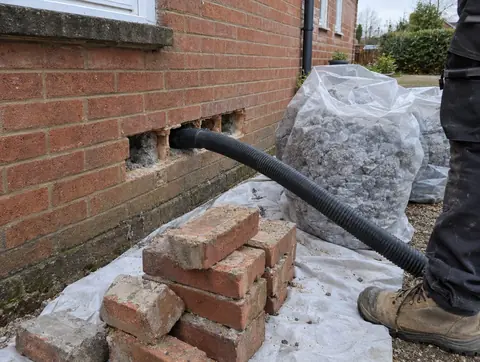
Cavity wall insulation removal
Extraction of wet, failed or unsuitable fill, with bricks lifted and reinstated.
Learn more →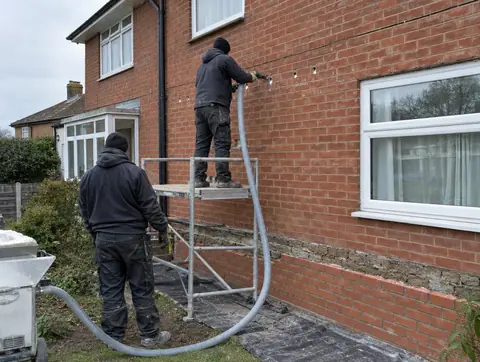
Remove and refill
Extract the failed fill, fix the cause, then refill with a system that suits the wall.
Learn more →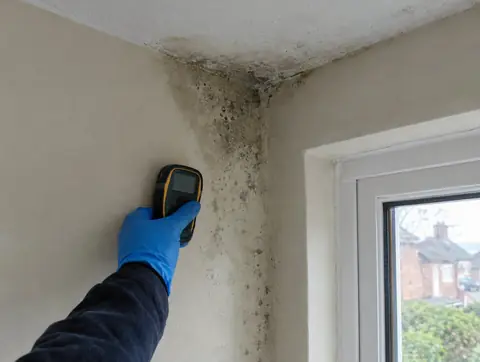
Damp investigation after cavity insulation
Find the real cause of damp before anyone recommends extraction.
Learn more →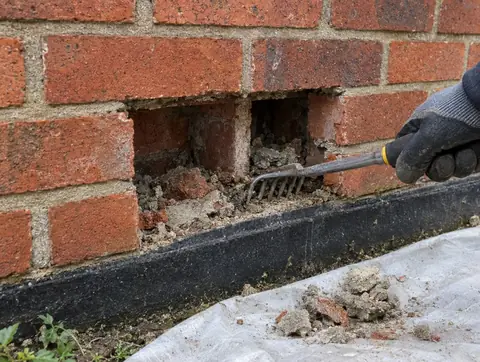
Cavity cleaning and debris removal
Clear mortar droppings and rubble that bridge the cavity and carry damp across.
Learn more →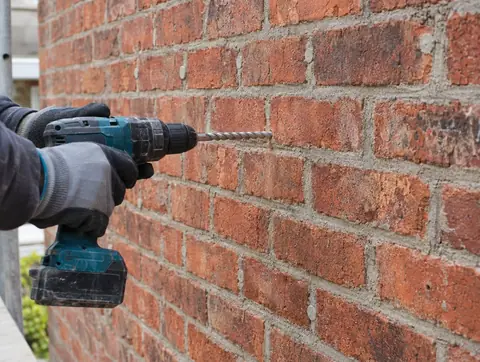
Wall tie replacement
Remedial ties fitted where old steel ties have corroded and the outer leaf is moving.
Learn more →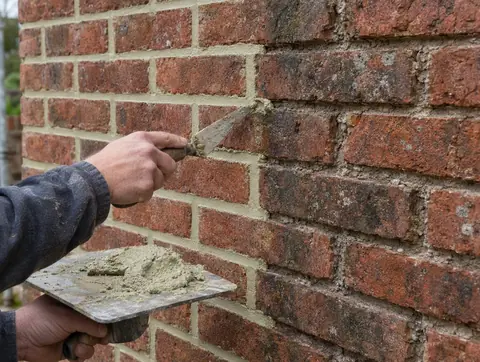
Repointing and pre-insulation repairs
Pointing, brick, sill and gutter fixes that make a wall fit to fill.
Learn more →Landlords, housing and commercial
Portfolios, blocks, estates and commercial buildings.
Cavity wall insulation for landlords
Portfolio surveys and fills that lift EPC ratings at the lowest cost per point.
Learn more →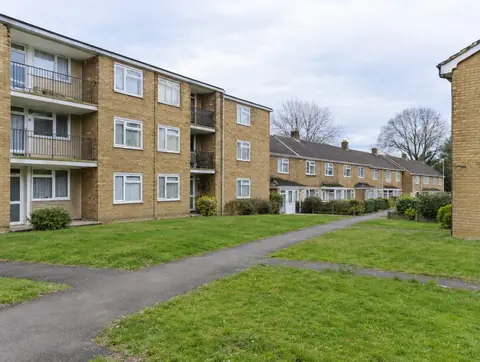
Social housing and estate programmes
Surveys, fills and remediation for housing associations and councils.
Learn more →
Commercial cavity wall insulation
Offices, schools, surgeries and light industrial buildings with masonry cavity walls.
Learn more →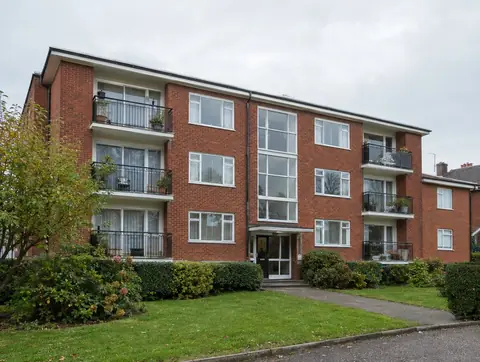
Cavity wall insulation for flats
Whole-block surveys and fills, coordinated with freeholders and managing agents.
Learn more →
Grant and funding check
A straight answer on whether a funded scheme could pay, before you pay privately.
Learn more →More insulation
The other quick wins that usually sit alongside a cavity fill.
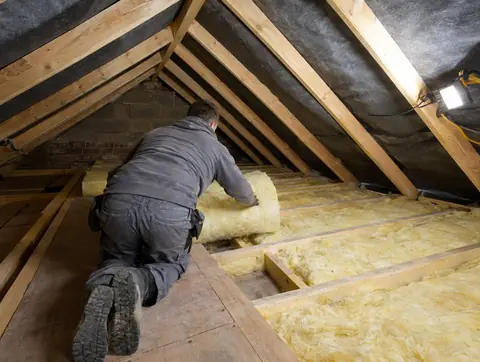
Loft insulation
Top up or replace loft insulation to current depths while we are on site.
Learn more →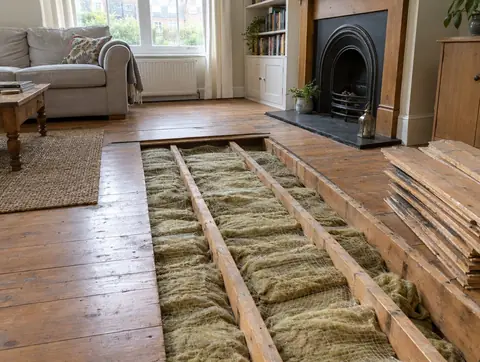
Underfloor insulation
Insulate suspended timber floors from above or below without losing ventilation.
Learn more →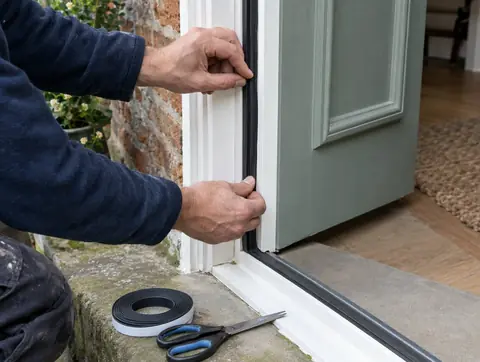
Draught-proofing
Seal gaps around doors, windows, letterboxes and loft hatches.
Learn more →Honest about walls that should not be filled
Survey first, not sales first
Every job starts with a wall-by-wall check. If a wall should not be filled, you get that in writing with the reason.
Removals and fixes too
Damp investigations, extraction, debris clearance and wall ties, so one team can put a failed fill right.
Straight answers on grants
We check what might fund your work and point you to the official route. No cold calls, no false promises.
Paperwork that stands up
Photos, the building regulations route, the installer and the guarantee, all named before you book.
What is cavity wall insulation?
Most UK homes built from the 1920s onwards have two walls with a gap between them. Cavity wall insulation fills that gap with a certified material blown in through small holes, so less heat escapes through the walls.
By the end of 2024 an estimated 71% of British dwellings already had cavity wall insulation, according to the government's Warm Homes Plan. The rest are a mix of homes that were never filled, homes that are not suitable, and fills that were missed in places or have failed.
That is why we start with the wall, not the sale: cavity width, debris, brick and pointing condition, damp and exposure to wind-driven rain all decide whether a wall should be filled, and with which system.
What does cavity wall insulation cost?
Guide ranges for a privately funded fill with bonded bead, the most common system we specify. Mineral wool is usually a little less. The Energy Saving Trust puts a typical Great Britain install at around £2,200.
| Cavity wall insulation, bonded bead | Guide price |
|---|---|
| Detached house | £2,295–£3,795 |
| Semi-detached house | £1,495–£2,495 |
| End-terrace house | £1,295–£2,195 |
| Detached bungalow | £1,295–£2,195 |
| Semi-detached bungalow | £895–£1,595 |
| Mid-terrace house | £795–£1,395 |
No VAT is charged on installing insulation in homes until 31 March 2027 (then 5%). Guide ranges only: the fixed price is confirmed in writing after a free survey, before any work starts, and anything that could not be seen at survey is agreed with you first.
Four steps, no pressure
Tell us about your home
Postcode, house type and what you need. Takes a minute online or by phone.
Free survey
We check walls, cavity, condition and exposure, and photograph what we find.
Written result and fixed price
Suitable, suitable after repairs, or not suitable. Fixed price, installer, scheme registrations and guarantee named.
Installation and paperwork
Usually a day for a fill. You get the building regulations confirmation and guarantee details.
Cavity wall insulation FAQs
How much does cavity wall insulation cost?
On our guide ranges a private install runs from about £795 for a mid-terrace house to about £3,795 for a large detached house. The fixed price is confirmed in writing after a free survey, before any work starts; anything that could not be seen at survey is agreed with you before it changes the price.
Is there VAT on cavity wall insulation?
Installing insulation in a home is zero-rated for VAT until 31 March 2027, then 5%. Supply-only materials, most commercial work, and surveys, removal and repairs (which are not insulation) are standard-rated.
How do I know if I have cavity walls?
Homes built from the 1920s onwards usually have them. Brickwork with every brick laid lengthways and a wall over about 260mm thick at a window reveal both suggest a cavity. The survey confirms it.
Can every cavity wall be filled?
No. Narrow or dirty cavities, walls in poor repair, homes with undiagnosed damp, very exposed walls and flood-risk properties may not be suitable. We tell you in writing if a wall should not be filled.
Will I get a guarantee?
Your quote names the guarantee that will be issued and by whom, for example a CIGA 25-year guarantee where the installer is CIGA-registered. If a job cannot carry an independent guarantee, we tell you before you book.
Does cavity wall insulation cause damp?
Correctly specified and installed on a suitable wall, it should not. Problems come from filling unsuitable walls, defects that let rain in, debris in the cavity, or condensation.
Areas we cover
England, Wales, Scotland and Northern Ireland, with the rules and funding for each nation explained on every local page.
England
- Bedfordshire
- Berkshire
- Bristol
- Buckinghamshire
- Cambridgeshire
- Cheshire
- Cornwall
- Cumbria
- Derbyshire
- Devon
- Dorset
- County Durham
- East Riding of Yorkshire
- East Sussex
- Essex
- Gloucestershire
- Greater London
- Greater Manchester
- Hampshire
- Herefordshire
- Hertfordshire
- Isle of Wight
- Kent
- Lancashire
- Leicestershire
- Lincolnshire
- Merseyside
- Norfolk
- North Yorkshire
- Northamptonshire
- Northumberland
- Nottinghamshire
- Oxfordshire
- Rutland
- Shropshire
- Somerset
- South Yorkshire
- Staffordshire
- Suffolk
- Surrey
- Tyne and Wear
- Warwickshire
- West Midlands
- West Sussex
- West Yorkshire
- Wiltshire
- Worcestershire
Wales
Scotland
- Glasgow
- Edinburgh
- Lanarkshire
- Ayrshire
- Renfrewshire and Inverclyde
- Dunbartonshire
- Lothian
- Fife
- Forth Valley
- Tayside
- Aberdeen and Grampian
- Highlands and Islands
- Argyll and Bute
- Dumfries and Galloway
- Scottish Borders
Northern Ireland
Find out if your walls can be filled
Free survey with an install quote. Written result. Fixed price before any work.